The REM Advantage: Why High Achievers Guard Their Sleep Like a Competitive Edge
You can tell within the first ten minutes of a meeting whether someone slept well the night before. The sharp follow up question does not come. The read on the room is a beat too slow. The decision that should have taken five minutes takes twenty.
Most high achievers write that off as a busy week. It is not a busy week. It is a brain that never got to finish its most important job while you were asleep.
That job happens during REM sleep, the stage most people cut short without even realizing it. And it is quietly costing you memory, focus, decision quality, and creativity, the exact things your career depends on.
Here is what REM sleep actually does, why it is the first thing to go when you are not resting enough, and what to do about it starting tonight.
What Sleep Deprivation Actually Costs You
Poor sleep is not just a physical issue. Science has connected it to weight gain, a weakened immune system, and a long list of downstream health risks. But for a high achiever, the more immediate cost is what it does to your brain. Insufficient sleep has been shown to impair:
• Short and long term memory. The information you need to recall in a meeting or a negotiation is harder to access.
• Learning. Your brain has a harder time absorbing and retaining anything new.
• Concentration and focus. The ability to stay locked in on one task drops off fast.
• Problem solving and decision making. The exact skills you are paid to use under pressure.
• Creativity. The original thinking that separates good work from great work.
None of that shows up as an obvious symptom. It shows up as a slightly worse version of your normal performance, day after day, until it compounds into something you notice.
The REM Stage: Where Your Brain Resets for Tomorrow
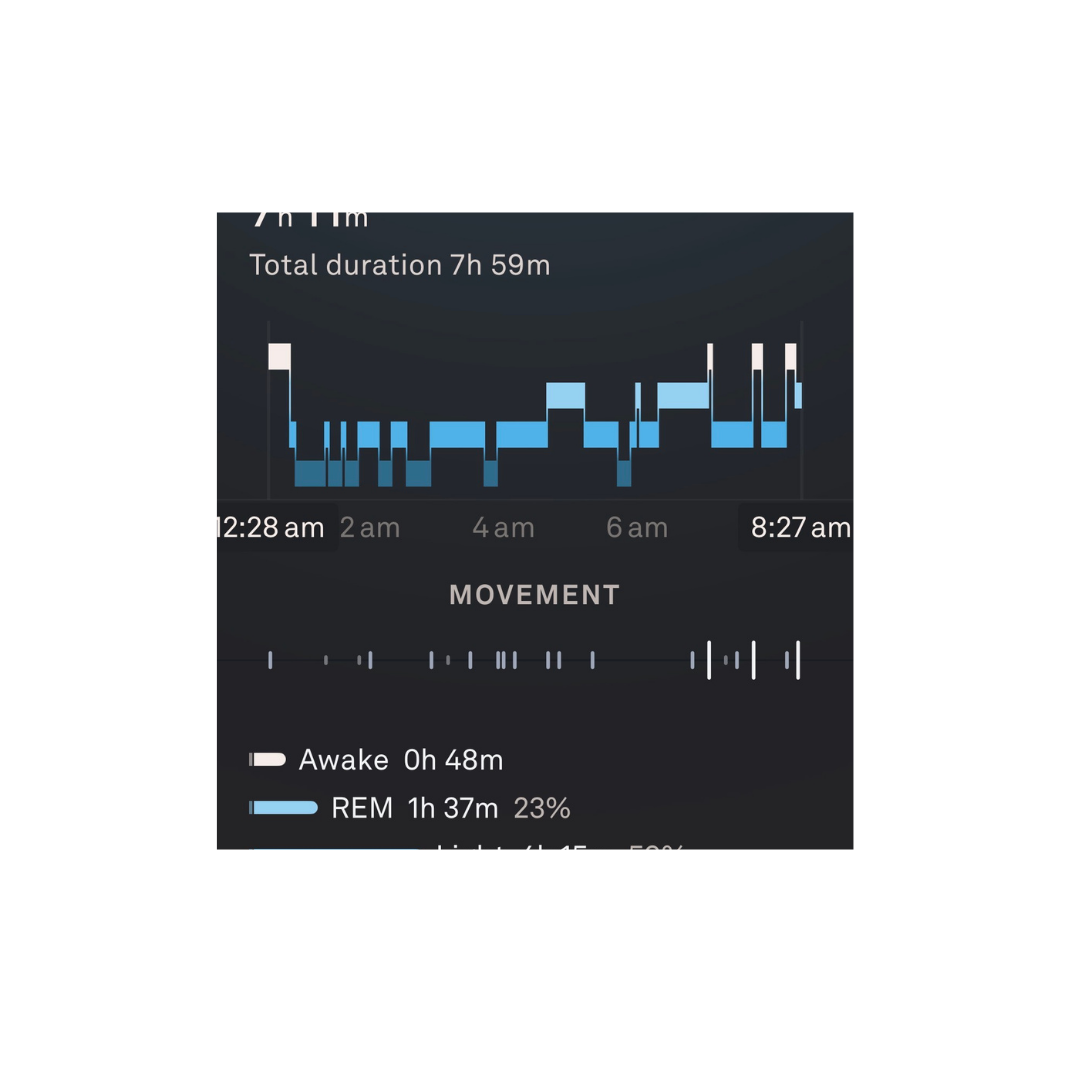
Sleep moves through three primary stages: deep, light, and REM, or rapid eye movement. REM sleep happens mostly in the back half of the night, which means it is also the first thing you lose when you cut sleep short or wake up early.
Your body handles physical recovery first, during the deep and light stages. Then your brain takes over. During REM, your brain becomes highly active while the rest of your body goes almost completely still, so still that heart rate and breathing can become irregular simply because the brain has stopped closely monitoring them. It is not resting. It is working.
That work centers on your Central Nervous System, the brain and spinal cord that make up your body's main signal highway. Sleep deprivation slows signals moving through that highway. During REM sleep specifically, your brain clears out waste and clutter, filing away what you need and discarding what you do not, so you wake up able to think clearly instead of carrying yesterday's mental noise into today.
This is why getting the recommended seven to nine hours matters so much for concentration, problem solving, and creativity. REM should make up roughly 20 to 25 percent of your total sleep. Cut your night short by even an hour, and REM is usually the stage that gets sacrificed first.
How to Protect Your REM Sleep, Starting Tonight
You cannot force your way into more REM sleep. You can build the conditions that make it far more likely.
• Set a consistent sleep schedule. Go to bed and wake up around the same time daily, including weekends and travel.
• Protect at least seven hours. REM sleep is loaded into the back half of the night, so shortchanging your sleep window shortchanges REM first.
• Give yourself a runway. Screens off, lights down, and something calming like reading or stretching in the thirty minutes before bed.
• Reserve your bed for sleep. No work, no email, no scrolling. Your brain should associate that space with rest, not output.
• Watch alcohol and caffeine timing. Both make it harder to fall asleep and disrupt the quality of the sleep you do get.
• Exercise regularly, earlier in the day. Regular movement supports your natural sleep rhythm, and outdoor light exposure helps set your internal clock. Just avoid training right before bed.
• Avoid smoke exposure. Even secondhand smoke has been shown to make falling asleep harder and reduce sleep quality.
What If You Could See Your Recovery, Not Just Guess at It?
Most high achievers can tell you their revenue numbers down to the dollar and have no idea how much REM sleep they got last night. That is the gap that quietly limits performance.
Picture opening your phone in the morning and seeing exactly how you slept, how much REM you got, how your recovery is trending over the week, next to the training and nutrition plan built around your schedule. No guessing whether last night was good enough. No wondering why today feels foggy. Just the data, and a coach who already saw it before you did and adjusted your plan accordingly.
That is what having your entire performance system in the palm of your hand actually looks like. The Fit4Success Blueprint pairs your personalized training and nutrition strategy with the full Specimen Training app, so recovery stops being a guess and starts being something you can see, track, and act on from anywhere.
Sleep stops being the thing you sacrifice for your career and starts being one more lever you control.
Your Next Step
You do not need to overhaul your entire night to see a difference. Pick one habit from the list above and protect it this week. A consistent wake time alone can improve your REM sleep within days.
If you want a system that tracks your recovery alongside your training and nutrition, so you always know where you stand, that is exactly what The Fit4Success Blueprint is built to deliver.
Because peak performance doesn't happen by accident.
It happens by design.
Start Your Transformation: https://www.specimentraining.com/start-your-transformation
Want more training tips and performance insights like this? Sign up for the In the Lab newsletter.