The High Achiever's Performance Trap: Why Your Desk Job Is Quietly Working Against You
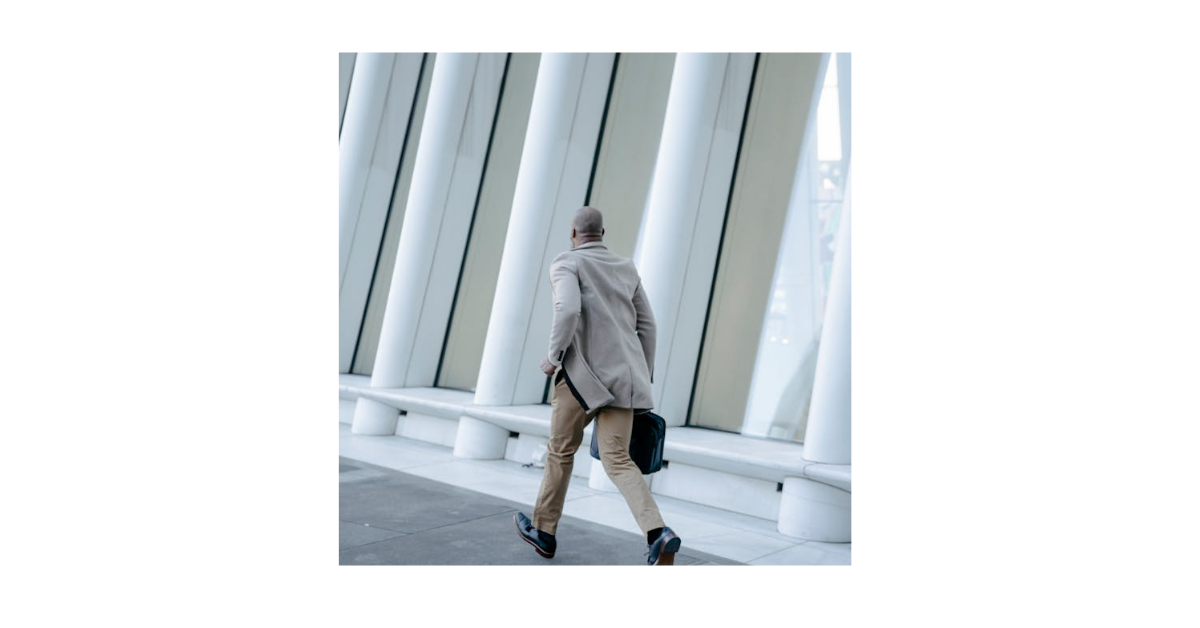
You optimize your calendar. You hit your targets. You hold yourself to a standard most people won't attempt. So why is your fitness the one area of your life where you keep losing ground?
It's not a character flaw. It's not laziness. It's a system problem, and your office environment is a significant part of that system. The same relentless focus that built your career is also what makes it so easy for your desk to win the daily battle against your health.
Here's what the latest research says, and what you can actually do about it.
Your Desk Is a Bigger Health Risk Than You Think
We're not talking about minor inconveniences like back pain and eye strain. A 2024 cohort study tracking 481,688 individuals over nearly 13 years found that professionals who predominantly sit at work face a 16% higher risk of all-cause mortality and a 34% higher risk of cardiovascular disease mortality, compared to those in more active roles.
Desk workers face a 16% higher mortality risk and 34% higher cardiovascular disease mortality risk (2024 cohort study, 481,688 participants).
Even more striking: research presented at the American Heart Association's 2024 Scientific Sessions found that more than 10.6 hours of daily sedentary behavior is significantly linked to heart failure and cardiovascular death, even in people who are already meeting standard exercise guidelines.
Read that again. You can technically be hitting your weekly workout numbers and still be losing ground, because it's not just about whether you exercise. It's about how much of your day you spend completely still.
In a survey of 1,000 office workers, 92% reported regularly spending the majority of their day sitting. For 58%, that's their everyday reality.
The Cognitive Cost You're Not Tracking
For high achievers, physical health is only part of the equation. What you might not be tracking is the cognitive toll of prolonged sitting, and that toll directly hits your performance.
A 2024 study from ScienceDaily found that active workstations incorporating standing, walking, or movement significantly improve mental cognition compared to standard seated work. Research on breaking up prolonged sitting consistently shows that even short movement breaks support brain function, working memory, and decision-making capacity.
Active workstations measurably improve mental cognition in desk workers (ScienceDaily, April 2024).
For a high achiever, this isn't a wellness footnote. It's a competitive edge you're leaving on the table every day you stay glued to that chair.
Why High Performers Fall Into the Trap
Here's the pattern: you're wired for performance, so when energy dips, you push through. When the calendar fills up, fitness gets bumped. When the week ends and you're running on fumes, the gym feels like one more demand on a system that's already maxed out.
Across office professionals, the data is consistent. 61% don't exercise regularly. 57% directly attribute their declining fitness to their sedentary work environment. And being too tired from work, a lack of motivation, and not enough time are the three most frequently cited reasons professionals stop exercising altogether.
57% of office workers blame their sedentary job for a decline in their health and fitness.
Nearly 1 in 7 have gone over 16 months at a stretch without exercising. And for high achievers, this creates a specific kind of frustration: a widening gap between who you know you're capable of being and who you're currently showing up as, physically, mentally, and energetically.
And it compounds. Research shows that 66% of office workers say it becomes harder to maintain a regular exercise schedule as they get older. The longer you wait, the heavier the inertia.
The Real Problem Isn't Willpower. It's the Model.
The traditional gym model was never designed for your life. It assumes you have a 90-minute window, the energy to commute, and mental bandwidth left over at 7pm. Most days, you don't. And telling yourself you should have it figured out by now is exactly why the cycle keeps repeating.
Nearly 1 in 3 office professionals feel intimidated by the gym, worried about being judged or not knowing what to do. 38% leave feeling like they didn't accomplish anything. 36% leave in frustration.
That's not a motivation problem. That's a friction problem. And friction is solvable.
What High Performers Are Doing Differently
The shift successful professionals are making isn't about trying harder. It's about removing the obstacles entirely.
When your training is brought to you, when the programming is built around your schedule and your performance goals, and when you have real accountability built into the structure, everything changes. No commute. No decision fatigue. No wasted time. Just an efficient, personalized system that integrates into the life you already have.
The research supports this. Adults spend an average of 60% of their waking hours in the workplace, making it the most logical leverage point for building fitness back into the equation. UK data shows 84% of working hours are spent sedentarily, which means the solution has to meet you where you actually are, not where the gym thinks you should be.
Adults spend an average of 60% of waking hours in the workplace, making work-integrated fitness the highest-leverage solution.
Ready to Close the Performance Gap?
Your desk job isn't going anywhere. The demands on your time won't suddenly ease up. But the gap between your current fitness and your potential doesn't have to stay open.
We bring the trainer, the equipment, and the plan directly to you, designed around your schedule, your goals, and the performance standards you actually hold yourself to. No gym required. No excuses needed. Just results built into the life you already have. And we’ll drop it all right into the palm of your hand.
High performers don't wait for the perfect moment. They build the system.