Your Brain Is Begging You to Meal Prep
How What You Eat and When You Eat It Determines How Well You Think, Lead, and Perform
Part 2 of the Specimen Training Meal Prep Series
You are not tired because you worked hard. You are tired because your brain ran out of fuel.
Think about the last time your afternoon hit a wall. Not a lack-of-sleep wall. Not a motivation problem. Just a slow, creeping fog that made even straightforward tasks feel like a grind. You reached for another coffee. Maybe something from the vending machine. Maybe nothing at all.
That is not weakness. That is biology.
Your brain accounts for roughly 20% of your body's total energy consumption, despite being only 2% of your body weight. It is the most metabolically demanding organ you own. And it runs on glucose. Not caffeine. Not willpower. Glucose, delivered consistently, from quality food sources, at the right intervals throughout the day.
When that fuel supply is erratic, when you skip breakfast, eat a heavy carb-loaded lunch, graze on processed snacks, or go four hours without eating, your cognitive performance follows. It spikes. It crashes. It flatlines at exactly the moment your highest-stakes work demands it most.
Meal prep solves this. Not as a diet strategy. As a performance protocol.
The Hidden Performance Tax of Unplanned Eating
Here is what most high achievers do not connect: the way you eat does not just affect your body. It directly affects the quality of every decision you make, every conversation you lead, and every problem you solve.
When you eat a processed, carbohydrate-heavy meal with little protein or fat, your blood sugar spikes sharply and then drops hard. Think fast food lunch, a pastry at a breakfast meeting, a bag of chips between calls. That crash is not just physical. It impairs working memory, slows reaction time, reduces your ability to regulate emotion, and triggers a cortisol response that puts your nervous system in a low-grade stress state.
Now layer on top of that the effect of skipped meals. When blood glucose falls too low, the brain signals a threat response. Cortisol spikes again. Focus narrows. Irritability rises. Complex analytical thinking, the exact kind that your career demands, deteriorates.
This is the hidden performance tax of unplanned eating. It does not show up on your calendar or your billing statement. But it shows up in your output.
What Meal Prepping Does to Your Brain — Specifically
Meal prep is not about eating perfectly. It is about eating consistently, and consistently is exactly what your brain needs to perform at its ceiling.
Here is what shifts when your food is planned, prepped, and ready:
Stable Blood Sugar = Stable Mental Output
Meals built around quality protein, fiber-rich carbohydrates, and healthy fats digest slowly and release glucose gradually into the bloodstream. That means no spike, no crash, and no 2pm fog. Instead, you get a steady, sustained energy curve that carries your cognitive performance through the entire workday.
For an attorney navigating complex litigation or an executive running back-to-back strategy sessions, that consistency is not a luxury. It is a competitive advantage.
Less Decision Fatigue Before the Day Even Starts
Every decision you make draws from the same finite cognitive reservoir. Research in decision science confirms that the more choices you make throughout a day, the lower the quality of your later decisions. This is a phenomenon known as decision fatigue.
When your meals are already prepped, you eliminate an entire category of daily decisions. What am I eating for lunch? Where am I ordering from? Do I have time to go get something? Gone. That bandwidth goes back into the work that matters.
This is exactly why elite performers, from Navy SEALs to Fortune 500 CEOs, systematize as many daily decisions as possible. Meal prep is one of the highest-leverage places to start.
Lower Cortisol, Sharper Focus
Cortisol is your body's primary stress hormone. In short bursts, it sharpens focus and mobilizes energy. When chronically elevated, it degrades memory consolidation, disrupts sleep quality, increases fat storage around the midsection, and accelerates cognitive decline.
Skipped meals and blood sugar crashes are cortisol triggers. Every time your blood glucose drops too low, your body releases cortisol to compensate. For a high achiever already carrying significant professional stress, this compounds fast.
Consistent, well-timed meals with adequate protein and fat blunt this cortisol response. Your stress system stays regulated. Your focus stays sharp. Your sleep, which is when your brain consolidates everything you learned and decided during the day, improves.
Protein Drives Neurotransmitter Production
This one most people miss entirely. Dietary protein is the raw material your brain uses to manufacture neurotransmitters: dopamine, serotonin, and norepinephrine. These are the chemical messengers that govern motivation, mood, focus, and executive function.
When protein intake is chronically low or inconsistent, as it tends to be when you are eating on the fly, neurotransmitter production suffers. You feel flat. Unmotivated. Mentally sluggish in a way that sleep alone does not fix.
Meal prepping with a deliberate protein anchor at every meal, whether that is ground turkey, chicken, eggs, Greek yogurt, or salmon, keeps that production pipeline running. Your brain gets what it needs to manufacture the chemistry of high performance.
What a Brain-Performance Meal Actually Looks Like
You do not need a complicated meal plan. You need a simple framework applied consistently. Every meal that supports energy and mental clarity is built on three pillars:
Protein + Fiber-Rich Carbohydrate + Healthy Fat
Here is what that looks like across a high-output day:
Morning: The Foundation Meal
This meal sets your neurotransmitter tone for the first half of your day. Hit it with high protein and moderate healthy fat. Keep simple carbohydrates low at this stage to avoid a mid-morning energy dip.
• 3 to 4 scrambled eggs or a Greek yogurt parfait with berries
• Avocado or a small handful of mixed nuts for healthy fat
• Oatmeal or whole grain toast for slow-release carbohydrate
Midday: The Performance Meal
This is the meal most high achievers sacrifice first. Do not. Lunch is your bridge between morning output and afternoon output. Miss it, or eat poorly here, and you pay for it in cognitive currency by 3pm.
• Lean protein: ground turkey, rotisserie chicken, canned salmon, or lentils
• Fiber carbohydrate: brown rice, quinoa, or a salad base with mixed greens
• Healthy fat: olive oil dressing, seeds, or sliced avocado
Afternoon: The Bridge Snack (Optional but Strategic)
If your day runs long and dinner is more than three hours out, a small protein and fat snack sustains blood glucose without spiking it. This is not a snack out of habit. It is a deliberate fuel decision.
• Hard-boiled eggs prepped the night before
• Greek yogurt with a small handful of walnuts
• A portion of prepped protein from lunch leftovers
The One Shift That Changes Everything
You do not need to overhaul your entire approach to eating this week. You need to make one shift:
Decide in advance what you are eating at your highest-risk meal, and have it ready before the week starts.
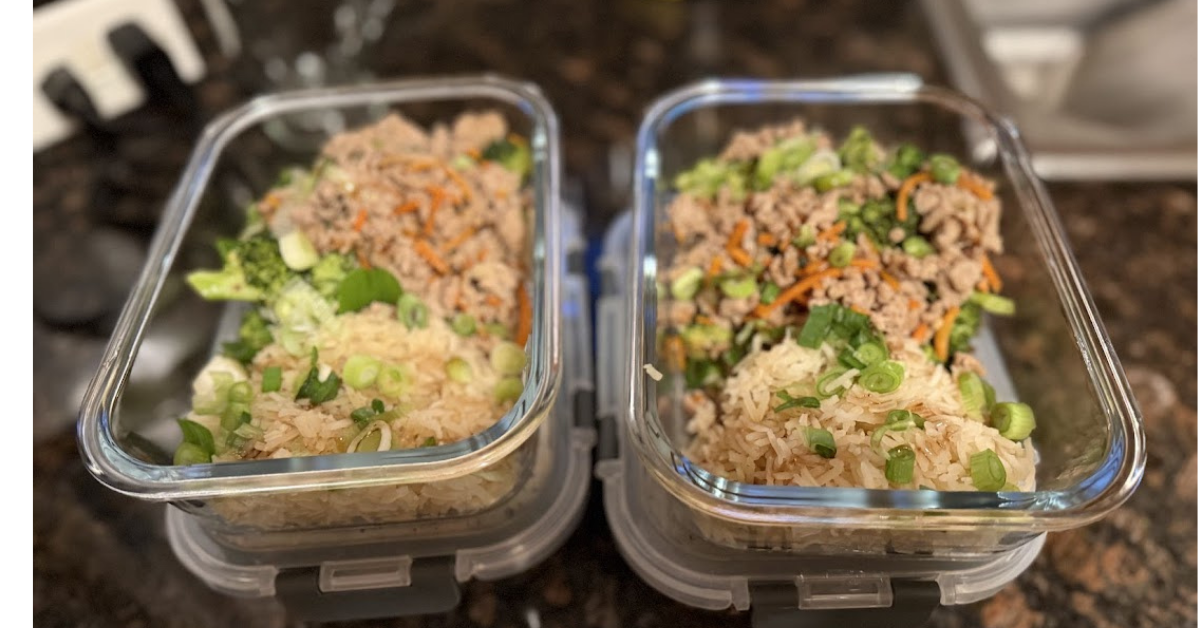
For most high achievers, that is lunch. It is the meal most likely to be skipped, delayed, or replaced by something fast and forgettable. Prep five lunches on Sunday, built on the Protein + Fiber + Fat framework, stored in glass containers ready to grab.
That single habit, done consistently, will change how your afternoons feel within two weeks. Your focus will extend. Your 3pm crash will flatten. Your decision quality in the back half of your day will improve measurably.
Not because you went on a diet. Because you gave your brain a reliable fuel source at the moment it needed it most.
Continue Building Your Performance Nutrition System
This post is Part 2 of the Specimen Training Meal Prep Series. Start at the beginning or continue building your system:
• Post 1: Meal Prep Is the Performance Edge You've Been Sleeping On [/blog/meal-prep-performance-edge-high-achievers]
• Post 3: The High Achiever's Meal Prep Formula — Build Performance Meals in Minutes [Coming Soon]
• Post 4: Meal Prep for Fat Loss — What to Eat When Body Composition Is the Goal [Coming Soon]
• Post 5: The Time-Efficient Prep Day — A Step-by-Step System for Busy Professionals [Coming Soon]
• Post 6: Meal Prep Mistakes High Achievers Make — and How to Fix Them [Coming Soon]
The Bottom Line
Your competitors are working the same hours you are. They are sitting in the same high-pressure environments. They are navigating the same complexity.
The ones who sustain peak performance longest are not the ones who grind the hardest. They are the ones who figured out how to fuel the machine.
Meal prep is how you do that. It is not a diet. It is a system. And systems are what separate consistent high performers from people who burn out trying to run on empty.
Ready to build the complete nutrition system around your training, your schedule, and your goals? Start your free consultation at SpecimenTraining.com and get your personalized Fit4Success blueprint, covering training, nutrition, and lifestyle integration designed for the way you actually live.
C'mon. Let's chisel.