Stop Chasing 10,000 Steps: The Number That Actually Matters for High Performers
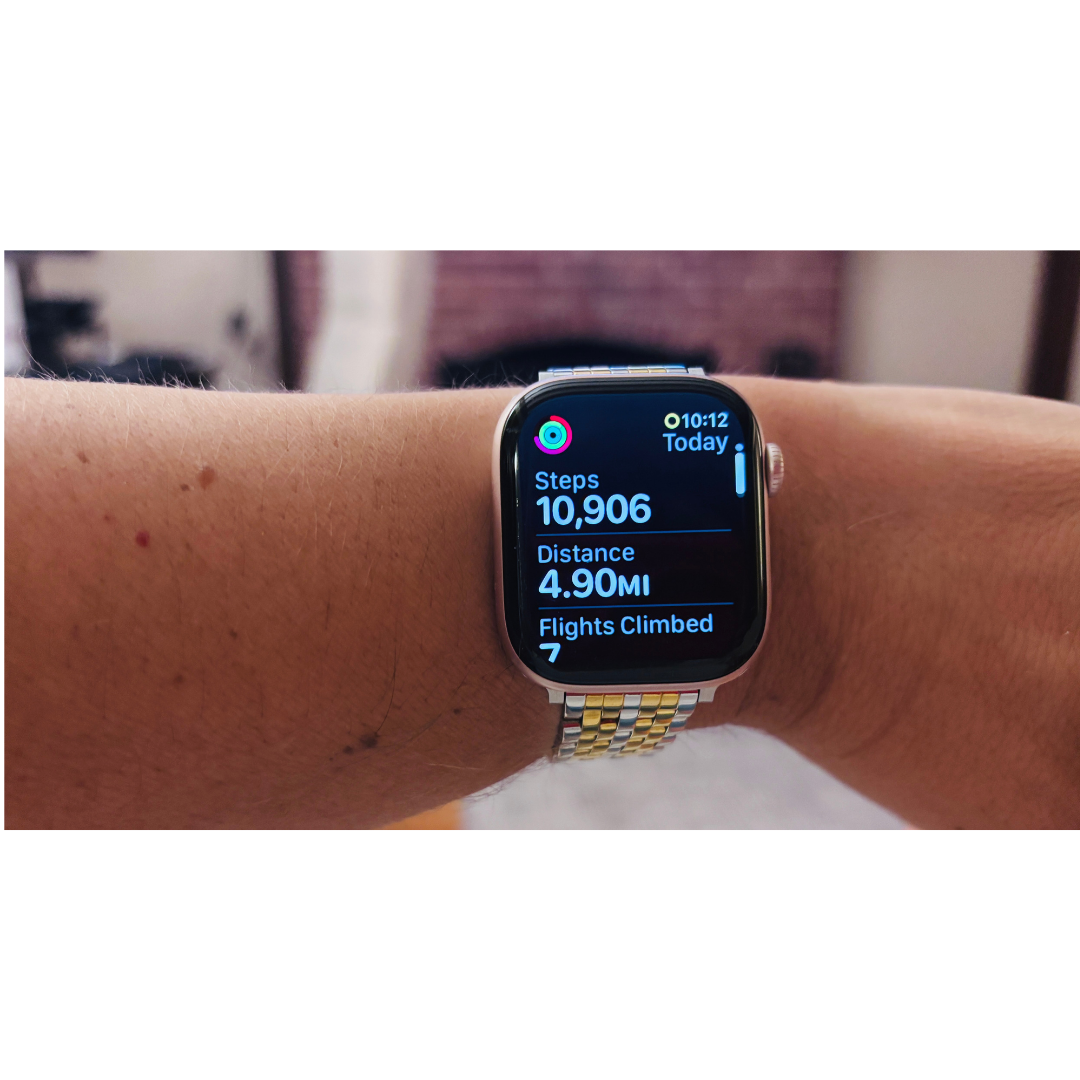
You've hit your step goal. You've got the little celebration on your watch. And yet, somehow, you still feel sluggish, unfocused, and like your body isn't performing the way it should.
Here's the truth: 10,000 steps was never a health standard. It was a marketing slogan.
If you're a high achiever running on a packed calendar and limited time, chasing an arbitrary number isn't just inefficient. It's the wrong game entirely. Let's break down where that number came from, what the science actually says, and the one metric that will move the needle on your energy, focus, and long-term health.
Where Did 10,000 Steps Even Come From?
Here's a fun fact worth knowing: the 10,000-step benchmark wasn't born in a research lab. It came from a Japanese pedometer released in the 1960s called the Manpo-kei, which loosely translates to "10,000 steps meter." It was a marketing name, not a clinical recommendation.
Despite zero medical or scientific foundation, that number stuck. For decades, it has been treated as the gold standard for daily activity, repeated by wellness apps, fitness trackers, and healthcare providers alike.
More recent research has tried to make the number work by connecting it to 30 minutes of moderate-intensity activity per day, which is the CDC and ACSM recommendation. The idea is that if your 10,000 steps include the right intensity of effort, you're checking the aerobic exercise box.
The problem? Most steps don't come close to that threshold.
Not All Steps Are Created Equal
Think about your average workday. You walk to the coffee maker. You head to a conference room. You grab your phone from the other side of your desk. Those steps add up on your tracker, but they aren't doing much for your cardiovascular system.
For walking to actually benefit your health, your pace needs to be brisk enough that conversation becomes difficult. This is known as the "talk test." Could you answer a question in a full sentence, or would you need to keep it to a quick yes or no? That threshold matters.
From a heart rate standpoint, moderate intensity means working at roughly 64 to 76 percent of your maximum heart rate. That's the zone where you're getting the cardiovascular benefit that actually supports better energy, sharper focus, and reduced disease risk.
Casual steps throughout the day don't get you there. Intentional movement does.
What the Research Actually Says About Step Counts
The science on steps is more nuanced than the 10,000-step rule suggests, and it's encouraging for anyone who isn't logging massive daily totals.
A 2019 study involving over 16,000 women between the ages of 62 and 101 found that walking just 4,400 steps per day was associated with a 41 percent reduction in mortality compared to those logging only 2,700. Benefits continued to grow up to around 7,500 steps, where mortality risk dropped by 65 percent. After that, the curve leveled off.
For adults under 60, a separate study showed progressively decreasing mortality risk at 8,000 to 10,000 steps per day. So the target does shift based on age and baseline.
The takeaway isn't that steps don't matter. It's that the right intensity and consistency matter more than hitting an arbitrary ceiling.
The Number You Should Actually Focus On: 30
Instead of fixating on your step count, shift your attention to 30.
Thirty minutes of moderate-intensity movement per day is the benchmark that decades of research support. It doesn't have to be structured exercise. It can be a brisk walk around the block, a walk-and-talk meeting, or a quick session on a stationary bike. What matters is that your heart rate gets into that moderate zone and stays there.
But the number 30 works in another direction too.
You should not be sitting for more than 30 consecutive minutes at a stretch. Sedentary time is an independent health risk, completely separate from whether or not you exercise. Research is clear that prolonged sitting contributes to obesity, high blood pressure, certain cancers, poor mental health, and metabolic dysfunction. Even people who exercise regularly face health consequences if they spend the rest of their day seated without breaks.
The sweet spot for breaking up sedentary time is moving for a few minutes every 30 minutes. Even a short walk to refill your water, a couple of flights of stairs, or standing and stretching briefly can counter some of the negative effects of extended sitting. If you want a deeper look at what prolonged sitting is actually doing to your performance, we cover it in detail in our post:
Sitting Is the New Smoking: What Every High Performer Needs to Know
How to Use Your Step Count the Right Way
None of this means you should ignore your step tracker. It's a useful tool when you use it correctly.
Think of your daily step count as a proxy for sedentary time, not a fitness score. If you look at your tracker at the end of the day and the number is embarrassingly low, that's useful data. It tells you that you were largely stationary and that tomorrow needs to look different.
Rather than aiming for 10,000 steps out of the gate, try this approach:
● Check your current average over the past week
● Add 200 to 500 steps as your first target
● Focus on getting those added steps at a brisk pace
● Build gradually over time
Small, consistent increases in physical activity, even if they're not structured workouts, improve your metabolism, support better energy regulation, and reduce long-term health risk. And if you want to stack your step time with additional benefit, one of the best and most underrated habits is a short walk right after eating. The research behind it is compelling: Why You Should Walk After You Eat
Practical Ways to Hit 30 Minutes Without Overhauling Your Day
For a high achiever with a full schedule, adding 30 minutes of intentional movement can feel like one more thing on an already impossible list. It doesn't have to be.
Here are a few strategies that work without carving out a dedicated gym block:
● Walk-and-talk meetings.Replace a seated meeting with a walking one. You get the movement, the conversation, and the mental clarity that comes from being in motion.
● Standing desk intervals.Use a standing desk or counter for portions of your workday. Even alternating 30-minute blocks of sitting and standing helps.
● Post-meal walks.A 10-minute walk after lunch or dinner keeps your circulation moving, supports blood sugar regulation, and contributes to your daily moderate-intensity total.
● Stack movement with existing habits.Take calls while walking. Park farther from the entrance. Take the stairs. These aren't hacks. They're intelligent design.
The Bottom Line
10,000 steps is not a health prescription. It's a number from a 1960s marketing campaign that outlasted its welcome.
What actually moves the needle for high performers is simple: 30 minutes of moderate-intensity movement per day, broken up into manageable pieces, combined with a commitment to avoiding extended periods of stillness. Use your step count to spot sedentary patterns, not to grade your fitness.
Shift your focus to the right number, and you'll notice the difference in your energy, your clarity, and your performance, not just your wearable's daily summary.
Ready to build a training plan that fits your life? If you're tired of chasing metrics that don't move the needle, it's time to train with a system built for how you actually live. Start Your Transformation