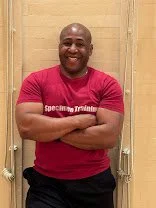
Focused & Fit Series (Part 1): Build All-Day Focus and Energy Without Leaving Your Desk
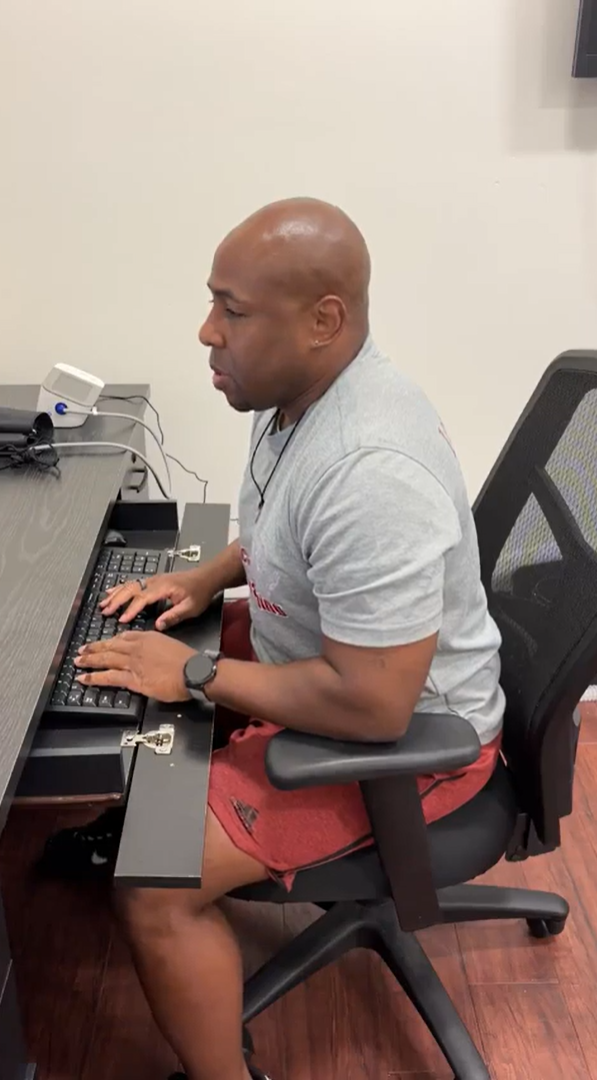
Last year, one of my clients hit a wall.
Not the kind that sends you to the doctor. The kind that's harder to diagnose — and more dangerous to ignore.
He's a regional director. High-stress job, high stakes every single day. He'd just taken on even more responsibility. And during one of our weekly check-ins, he said something that stopped me cold.
"I'm sharp in the morning. But as the day goes on — I lose it."
For a guy in his position, that wasn't just frustrating. That was a real problem. Decisions made at 3 PM carry the same weight as decisions made at 8 AM. Except his mind was no longer operating at the same level.
So I designed a program for him.
Every few days, I dropped a science-backed micro-habit directly into his app. Something he could execute right at his desk…no gym, no extra time, no disruption to his workflow. Each one was engineered to sharpen his focus and keep him physically fit at the same time. I explained the science. He worked each habit for a few days, and let the ones that hit become permanent.
I called it Focused & Fit.
It worked. It's worked for every client I've used it with since.
And now I'm bringing it to you.
This is Part 1 — the first 5 micro-habits from the full 10-habit program. Each one is desk-friendly, research-supported, and built for the specific demands of attorneys, executives, and high performers who can't afford to fade in the back half of the day.
Let's get into it
What Is the Focused & Fit Program?
Focused & Fit is a 10-habit system designed for one type of person: a high-achieving professional whose schedule is full, whose stakes are high, and who refuses to sacrifice their physical and mental health to meet the demands of their career.
These aren't tips from a wellness blog. They're field-tested practices that have been deployed inside a structured coaching program, backed by science, and refined with real clients over time.
Each habit has two jobs: improve your focus and cognitive performance during the workday, and contribute to your physical fitness simultaneously. No habit in this program requires extra time outside of your existing schedule. They layer into what you're already doing.
That's the design principle. That's what makes it work for people who have no margin to spare.
Here are the first five.
1. Deskbound Mobility: Restore Blood Flow, Restore Focus
What to do: 2 minutes every hour, shoulder rolls, chest openers, spinal twists.
Prolonged sitting triggers a cascade of physiological consequences. Circulation slows. Spinal compression increases. The muscles responsible for keeping you upright fatigue — forcing your body into compensatory patterns that drain energy and dull mental sharpness. For attorneys and executives logging 8–12 hour days at a desk, this isn't an occasional inconvenience. It's a daily performance tax.
Why it works:
Prolonged sitting reduces circulation and limits oxygen delivery to the brain. Brief mobility work restores blood flow, improves posture, and enhances cerebral oxygenation, which directly supports attention and decision-making.
Performance payoff:
You don’t just feel better. You think clearer, communicate sharper, and maintain presence in high-pressure moments.
How to install it: Set a recurring alarm every hour. When it fires, you don't negotiate — you move. Ten shoulder rolls forward, ten back. Hands clasped behind your back, chest lifted, hold 20 seconds. Seated spinal twist, 15 seconds on each side. You're back in the game in under 2 minutes…but you're back sharper than you hit the pause button.
2. Stand for Calls: Change Your Physiology, Change Your Output
What to do: Take phone calls or Zoom meetings standing, pacing or walking.
This is one of the lowest-friction habits in the Focused & Fit program. Which is exactly why it works…and why most people never bother with it. Most professionals approach a phone call the same way they approach everything else at work - seated, slightly hunched, locked into the screen in front of them. It's a habit so ingrained it feels like protocol. But it's quietly working against you. Your nervous system, already taxed by hours of cognitive work, gets no signal to shift gears.
Why it works:
Standing increases muscle activation and stimulates the nervous system. This elevates alertness and increases energy expenditure through non-exercise activity, also known as NEAT. Research consistently links standing and light movement to heightened alertness and more confident verbal communication. In a negotiation, a client call, or a tense board discussion, that edge matters.
Performance payoff:
More engaged conversations, stronger delivery, and a noticeable shift in energy during meetings that matter.
How to install it: The next time your phone rings or a Zoom fires up, stand up before you answer. Better yet, pace. Walk a slow loop around your office. Let your body move while your mind works. Do it for one week and pay attention to how your energy holds up on the back end of a heavy call day. You will notice the difference.
3. The 3–30 Rule: Micro-Movement, Macro Results
What to do: Every 30 minutes, perform 3 quick movements, squats, push-ups, or glute squeezes.
That 2 PM crash most professionals experience isn't primarily a caffeine problem. It's a movement problem. Your brain runs on blood flow. Blood flow depends, in part, on movement. When you've been seated for 30 minutes or more without moving, blood pools in your lower extremities, oxygen delivery to the brain dips, and fatigue signals start firing. The harder you push without addressing the underlying mechanism, the worse it gets.
The 3-30 Rule interrupts that pattern before it compounds.
Three bodyweight movements every 30 minutes is not a workout. It's a physiological trigger, just enough muscular contraction to stimulate circulation, re-engage your postural muscles, and send a fresh oxygen delivery to your brain. The time investment is under 90 seconds. The return is a measurable reset in mental clarity and physical energy.
Over the course of an 8-hour workday, that's 16 resets. Sixteen opportunities to stay sharp when everyone else in the room is fading.
Why it works:
Frequent movement spikes blood flow, reduces fatigue, and helps regulate dopamine levels tied to focus and motivation. It also counters the metabolic slowdown that comes with prolonged sitting.
Performance payoff:
Sustained energy, reduced mental fatigue, and improved productivity across the entire day.
How to install it: Set a recurring 30-minute timer — phone, smartwatch, or desktop alarm. When it fires, pick three movements and execute. Don't overthink the selection. The point isn't optimal exercise programming; it's interrupting stagnation. Any three movements done consistently will outperform the perfect three movements done occasionally.
4. Hydration Triggers: Eliminate Hidden Fatigue
What to do: Drink 10 sips of water during or after every meeting.
By the time you feel thirsty, you're already behind.
That's not a figure of speech. Thirst is a lagging indicator…your body's signal that dehydration has already begun. And even mild dehydration, defined as a fluid loss of just 1–2% of body weight, measurably impairs cognitive function. Attention narrows. Working memory degrades. Decision-making slows. Fatigue sets in earlier than it should.
For a professional whose livelihood depends on sharp thinking, that's not a minor inconvenience. That's a direct and quantifiable threat to the quality of your output.
Most high performers know they should drink more water. The problem isn't awareness — it's that water doesn't make noise. It doesn't send calendar invites. There's always something more urgent demanding your attention.
So stop relying on intention. Use your existing calendar infrastructure instead.
How to install it: Pair the behavior with an anchor that's already non-negotiable in your day. This is habit stacking - one of the most reliable mechanisms in behavioral psychology for making new behaviors automatic. Your meetings are the anchor. Water is the upgrade. Keep a full bottle on your desk before your first meeting of the day and don't open your next email until you've used it.
Over the course of a full workday, this single habit can get you to 60–80 ounces of hydration without a single moment of extra intention. The cognitive clarity return on that investment is not subtle.
Why it works:
Even mild dehydration can impair cognitive function, memory, and mood. Hydration supports cellular function, brain performance, and energy regulation.
Performance payoff:
Clearer thinking, better mood stability, and fewer energy crashes during critical work blocks.
5. Protein-Powered Lunch: Stabilize Energy and Focus
What to do: Prioritize 30–40 grams of protein at your midday meal - chicken, eggs, fish, lean beef, Greek yogurt, tofu.
The typical busy-professional lunch is carbohydrate-heavy and protein-light. A sandwich, a wrap, pasta from the spot near the office, something grabbed between meetings. These foods spike blood sugar rapidly — delivering a short burst of energy followed by an equally sharp crash. Insulin spikes, glucose drops, and your body spends the next two hours trying to stabilize.
You feel it as fatigue. As the inability to concentrate on the document in front of you. As the irresistible pull toward a nap you can't take.
This isn't a willpower failure. It's a predictable physiological outcome of the wrong fuel at the wrong time.
Protein changes the equation. It digests slowly, keeping blood sugar stable and energy levels consistent across the back half of your workday. It provides the amino acids your brain uses to synthesize neurotransmitters like dopamine and serotonin — which regulate mood, motivation, and focus. It also supports muscle repair and retention, which matters if you're building the physical habits in this program.
30 to 40 grams of protein at lunch is not a complicated nutrition protocol. It's one intentional decision per day.
How to install it: A 6-oz grilled chicken breast delivers roughly 40 grams. Three scrambled eggs with a cup of Greek yogurt gets you to 35. A quality protein shake with a side salad can hit that number in under five minutes. You don't need to overhaul your diet. You need to make protein the non-negotiable centerpiece of one meal.
The attorneys and executives who sustain elite performance across long careers don't just train harder. They fuel smarter. Your midday meal is one of the highest-leverage decisions you make every day.
Make it count.
Why it works:
Protein supports neurotransmitter production, including dopamine, which plays a key role in focus and motivation. It also stabilizes blood sugar, preventing the afternoon crash.
Performance payoff:
Steady energy, sharper focus, and better performance when your day demands the most.
The Bottom Line
You don’t need more time.
You need better execution.
These habits are designed to fit inside your day, not compete with it.
And when you stack them consistently, you build something powerful:
a body and mind that perform at a higher level, all day long.
The Bigger Picture
Five habits in. Each one takes under two minutes to execute. None of them require a gym, a meal prep service, or a schedule overhaul. And yet, applied consistently across a full workday, they address five of the most common performance drains affecting high-level professionals: postural fatigue, low-energy communication, afternoon cognitive crashes, dehydration-driven fog, and blood sugar volatility. That's not a coincidence. These habits were selected and sequenced because they target the specific mechanisms that erode performance for people living inside demanding professional environments. Part 2 covers Habits 6 through 10 — afternoon recovery, caffeine strategy, posture resets, screen-free rituals, and the identity anchor that holds everything else together. But don't wait for Part 2 to start. Pick one habit from this list. Install it today. Let it run for three days before you add another. That's the protocol. That's how it was designed. And that's how it works.
Ready to go further than a blog post?
The Focused & Fit program runs inside the Specimen Training app — where habits like these are delivered directly to you, spaced for maximum retention, with the science and coaching context behind each one.
If you're an attorney or executive who's serious about performing at the highest level physically and mentally — this is the system built for you.
Book your free consultation and get the app
Let's build the focused, fit, high-performing version of you. C'mon. Let's chisel.