Train Like It's Non-Negotiable: The Science of Habit Stacking for Busy Professionals
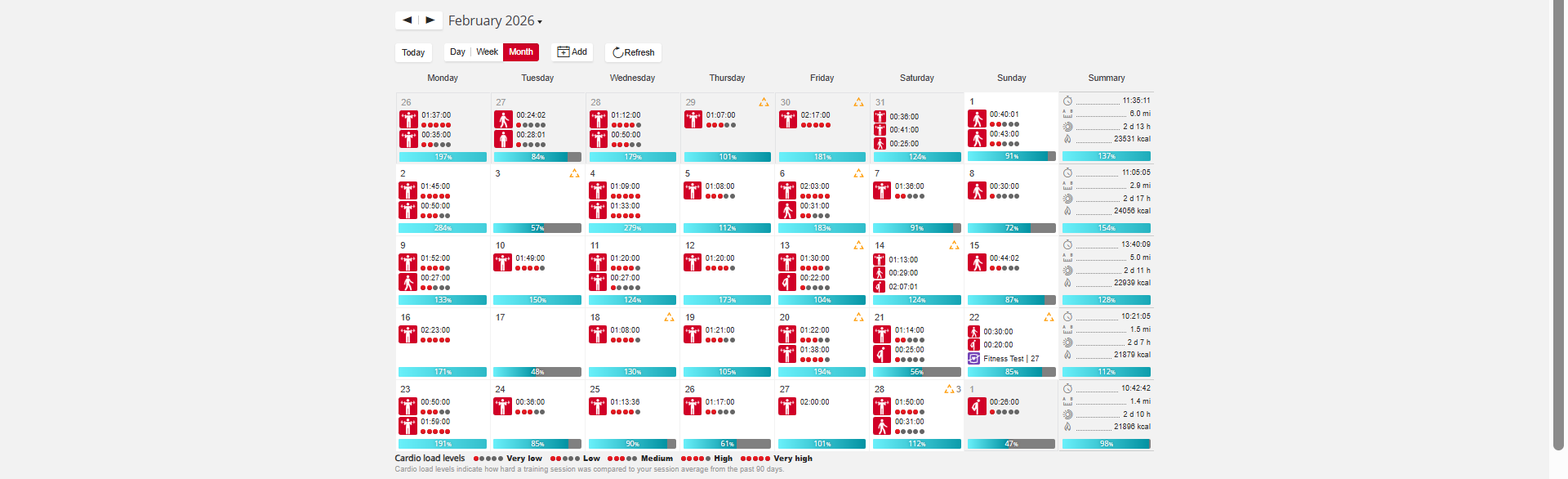
The image for this post is my training log from February 2026. Every session, accounted for. That consistency doesn't happen by chance, and it sure doesn't happen because my schedule magically cleared. It happens by design, every single time, through one repeatable sequence:
I mix my pre-workout and start sipping. From that moment, I have 30 minutes until the session begins. Then I get dressed. I figure out what I need; lifting shoes or gym bag. I grab my inhaler. And I head to the workout, taking one puff right before I get out of the car, about 5–8 minutes before I'm in motion.
That's it. Every single workout follows those steps. And here's what matters most: the moment I mix that drink, the workout is guaranteed. Even if something goes sideways…wrong bag, forgot the inhaler, the next step still happens. I just tell myself "this cardio is about to suck" and I go anyway.
That sequence has a name. It's called habit stacking.
What Is Habit Stacking?
Habit stacking is a form of implementation intention, a concept James Clear breaks down thoroughly in Atomic Habits. The science defines it as pairing a new desired behavior - like training, with an existing one you already do consistently. Your alarm going off. Walking in the door after work. Pouring your morning coffee. When you anchor a new habit to something that already happens in your day, you dramatically reduce the mental effort required to start it.
It works because humans are wired for routine. We don't decide to brush our teeth each morning; we just do it. Habit stacking transfers that same automaticity to behaviors you actually want to build.
For me, the cue is the pre-workout cocktail. For a litigator who bills by the hour, it might be closing the laptop at 5:30. For an executive, it might be the elevator ride down from the office. The cue doesn't need to be elaborate. It just needs to be yours and it needs to happen every day.
Why This Matters More Than Motivation
Here's the uncomfortable truth about fitness goals: intention isn't the problem. Execution is.
According to a 2025 survey by the Health & Fitness Association, approximately 96 million U.S. adults planned to prioritize health, fitness, or exercise this year (making it the most popular resolution category in the country). Yet a 2023 Forbes Health poll found that nearly half of people abandon those goals within two months, and fewer than 10% ever actually accomplish them.
You're not in that group because you lack discipline. You're in that group because discipline was never the right tool to begin with. Discipline requires a daily decision. Habit stacking eliminates the decision entirely…decision fatigue can’t even get started.
That's exactly why it works for high-performers with relentless schedules. The less cognitive overhead your training requires, the more likely it survives a brutal week in court or a meeting that runs two hours long.
How to Build Your Own Habit Stack
Start by looking at what you already do…not what you wish you did.
Step 1: Map your existing anchors. Walk through your day hour by hour and note the habits that happen at roughly the same time each day without thought: checking email, ending a standing meeting, taking a lunch break, walking to your car.
Step 2: Define your new habit with precision. Vague goals don't stack well. "Exercise more" isn't stackable. "Do 15 minutes of resistance training immediately after I close my laptop at 5:30" is. Name the action, the time, and the location. This is called a statement of intention, and specificity is what makes it stick.
Step 3: Find the right anchor. Go back to your list from Step 1. Which existing habit most naturally leads into your new one? Would that 15-minute walk work better at the start of lunch or the end? The fit matters. A forced stack won't hold.
Step 4: Run a one-week test. Don't overhaul your life, just test the stack for seven days. At the end of each day, check in: Did you do it? How did it feel? Friction is data. If it's not working, the stack needs adjusting, not your character.
Give yourself room to miss one. Your calendar is already operating at full capacity - there will be slip-ups. What separates the people who build lasting habits from those who don't isn't a perfect streak. It's showing up again after the streak breaks.
Over time, the new behavior stops feeling like a decision. One day you'll realize you didn't think about whether to train, you just did it. That's the system working exactly as designed.
Ready to Make Training Non-Negotiable?
Habit stacking is one piece of the system. Inside Fit4Success, I build the entire structure around your schedule, your goals, and your life — so training isn't something you have to remember. It becomes something you just do.
If you're an attorney or executive who's serious about reclaiming your fitness without sacrificing the career you've built, let's talk. Book your free 30-minute strategy call and we'll map out exactly what your habit stack looks like, and what it unlocks.