Resistance Training Isn't Optional: What a 117,000-Woman Study Reveals About Your Heart
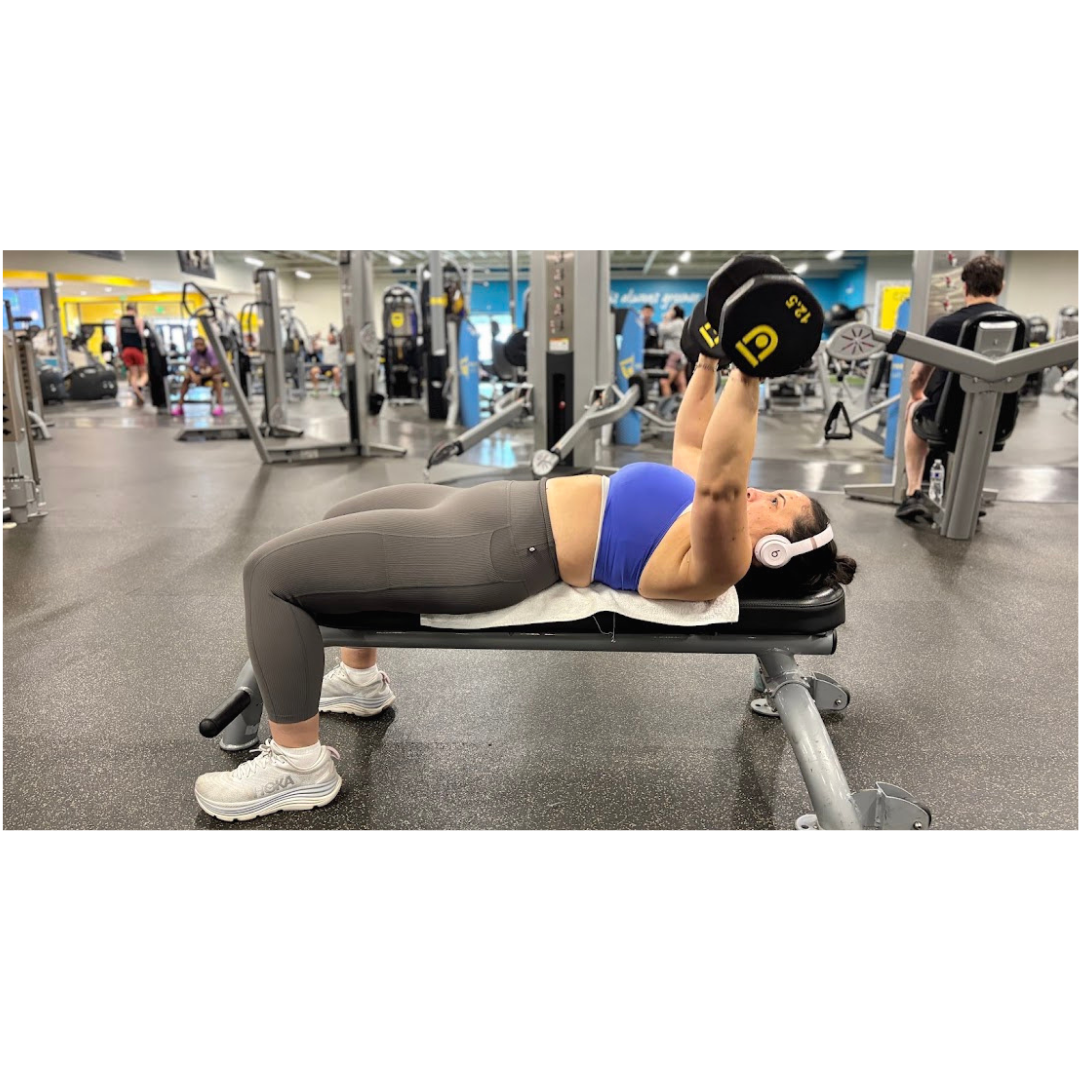
You already run. You already do your cardio. Maybe you've got a Peloton habit or a standing Saturday hike. And somewhere along the way, you decided that was enough. Lifting weights felt like a bonus. Something for people chasing a look, not people protecting their heart.
New research says that assumption might be putting you at risk.
The Problem: cardio has been treated as the whole solution
For decades, cardiovascular health messaging has centered almost entirely on aerobic activity. Run more. Walk more. Get your heart rate up. Resistance training, when it came up at all, was framed as optional. Nice for muscle tone. Not essential for your heart.
That framing has real consequences. If you're a high-achieving professional squeezing exercise into an already-full calendar, "optional" is the first thing that gets cut. And for a lot of people, especially women, that cut has been happening for years.
What "skipping it" is actually costing you
Here's the problem with treating resistance training as optional: your muscles aren't just for aesthetics. They're active tissue that regulates how your body handles blood sugar, inflammation, and metabolic load, all of which feed directly into cardiovascular risk. When you outsource "heart health" entirely to cardio and skip the lifting, you're leaving one of your most powerful levers untouched.
A study published in the Journal of the American College of Cardiology (JACC) puts numbers behind this. Researchers followed 117,025 women from the Nurses' Health Study and Nurses' Health Study II for a mean of 14.5 years, tracking physical activity habits repeatedly over that span. Over the course of the study, 5,459 women experienced a major cardiovascular event.
The findings should end the "cardio is enough" debate for good:
● Women doing 2 or more hours of resistance training per week had a 20% lower risk of major cardiovascular disease compared with women who did none.
● Every additional hour of weekly resistance training was linked to a 5% lower risk.
● The protective effect was strongest for heart attack specifically, where women meeting the 2+ hour threshold saw a 44% lower risk.
● Even women who couldn't hit the full 2-hour target still saw meaningfully lower risk from doing some resistance training. Partial credit counts.
And the real headline: women who combined resistance training with regular aerobic activity and less than 2 hours of daily TV time had a 40% lower risk of major cardiovascular disease than a reference group. Resistance training wasn't a nice add-on to that outcome. It was one of the three load-bearing pillars.
Your Solution: treat lifting like a non-negotiable, not a bonus round
This is where the research stops being interesting and starts being actionable. The data points to a simple standard: build in roughly 2 to 3 hours of resistance training per week, split across a few sessions, alongside the cardio you're already doing.
For most people, that translates to two to three lifting sessions a week, in the 30 to 45 minute range. That's not an unreasonable ask, even for a packed calendar. It's actually the exact model we've built Fit4Success around. If you've read 30 Minutes Is Enough, you already know that short, efficient, well-programmed sessions can carry real physiological weight. This study is one more reason those minutes matter.
The harder part isn't the time commitment. It's the consistency. And that's exactly the gap we talk about in Train Like It's Non-Negotiable: most people don't fail at fitness because they lack information. They fail because nothing forces the habit to stick when the calendar gets tight. This is precisely the kind of finding that should move resistance training from "if I have time" to "this is on the calendar, period," the same way you'd treat a recurring client call or a board meeting.
A necessary caveat
This is an observational study, and the authors are upfront about that. It shows a strong association between resistance training and lower cardiovascular risk, not proof that lifting alone causes the reduction. Women who lift regularly may differ from those who don't in other ways that also affect heart health. But the size of the cohort, the length of follow-up, and the dose-response pattern (more lifting, incrementally lower risk) make this some of the strongest evidence to date that resistance training deserves a permanent seat at the table, not a guest pass.
The bottom line
If your current routine is cardio-only, this isn't a call to abandon it. It's a call to stop treating strength work as the thing you'll get to eventually. The women in this study who protected their hearts most effectively weren't choosing between cardio and lifting. They were doing both, consistently, along with staying off the couch.
Three lifting sessions a week isn't a stretch goal. Based on what the data shows, it might be the difference between a heart-healthy routine and one that only looks complete.
Ready to make resistance training the non-negotiable it should be? Start Your Transformation